Why a Playing Surface Changes the Shape of a Game
Learn how a playing surface changes traction, bounce, and ball travel, and use those differences to choose a setting that fits your sport and players.
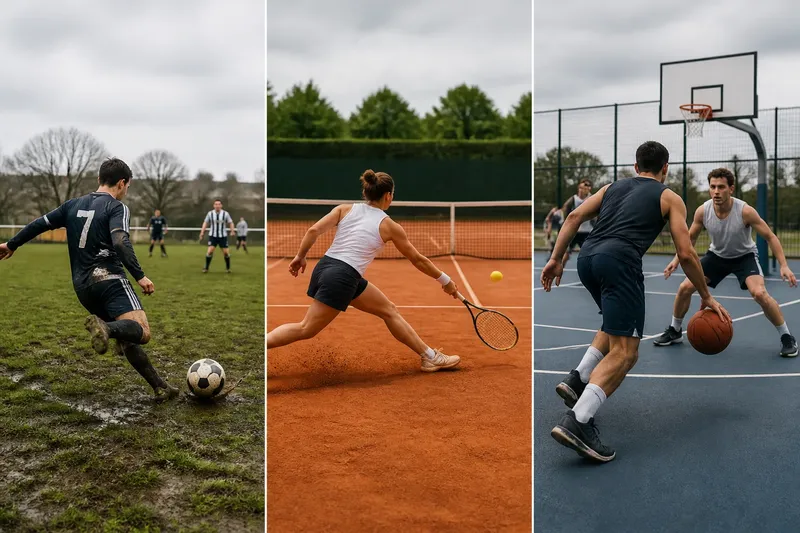
Why does the same game feel different on grass, clay, or a hard court? A playing surface changes traction, bounce, and ball travel, so it can shape a tennis rally before anyone changes the rules. The difference is visible in a soccer pass or a ball that skids across a rain-dark field.
Each surface creates its own conditions. The sport, the style of play, local weather, upkeep, and players’ comfort all affect which setting makes sense. Comparing those effects helps explain why the ground is part of a game’s character.
A playing surface changes movement and ball response
Traction is the grip a player gets when accelerating, stopping, or changing direction. A surface with firm purchase can support sharp cuts, while slick or loose ground may call for shorter steps and more careful turns. The useful amount of grip depends on the sport: a runner needs a stable push-off, while a sliding sport needs room to glide without an abrupt stop.
Bounce matters just as much. A firm, even surface tends to give a ball a more regular rebound; softer or irregular ground can absorb energy or send the ball off at an unexpected angle. Friction and resistance affect travel, too. A ball may roll farther across a smooth court than through thick grass, while a pass can slow quickly on a soft field.
These conditions shape tactics as well as comfort. Players may choose an earlier shot, a safer pass, or a different position because the surface changes the time and space available to respond.
Grass asks players to read changing conditions
Natural grass is a living surface. Its firmness and height can vary with weather, wear, maintenance, and the pattern of play. A ball may hold its line in one patch and take a softer or less regular bounce in another. Underfoot, grass can feel springy, slick, or worn down, so players need to read the ground as they move.
In tennis, grass is associated with a lower, quicker bounce than many other court surfaces, though conditions vary. In soccer and rugby, grass can offer a softer landing than a hard court, but wet or worn sections may affect footing and ball control. For field sports, the surface’s condition and upkeep matter alongside its type.
Grass can suit players and organizers who value a natural setting and accept that conditions shift. The tradeoff is that weather and wear can make play less consistent, and the field may need care before it is ready for another session.
Clay slows tennis and rewards controlled movement
Clay courts have a loose top layer over a prepared base. In tennis, clay generally slows the ball and produces a higher bounce than grass. That can lengthen rallies and give players more time to reach a shot, rewarding patience and deliberate point construction.
Footwork changes, too. Players can slide into a shot when the surface and their technique allow it, then push away to recover. That movement requires balance and control; every step becomes part of the performance. Someone who prefers quick, direct points may find the pace less natural, while a player who enjoys building a rally may welcome the extra time.
Clay’s feel depends on moisture, preparation, and maintenance. It can mark clothing and shoes, and the surface needs attention to remain playable. Its distinct character comes from the way it gives patience, spin, and controlled movement a place in the game.
Hard courts offer a steady, readable response
Hard courts use a firm base with a finished playing layer. Compared with natural grass or loose clay, they often provide more consistent footing and bounce. That predictability can help players commit to direct movement and time their shots, though the pace still varies with the finish and sport.
In tennis, a hard court can offer a middle ground: the ball often moves more freely than on clay while bouncing more regularly than on grass. Basketball and netball also rely on firm courts for quick changes of direction and a dependable ball response. Players and venues may value a stable setting where the effect of technique is easier to read.
The firmness feels different from grass or clay, with less give underfoot. For a venue, the choice should account for the sport’s demands, players’ comfort, and the facility’s capacity to maintain the surface.
How should you compare surfaces for a sport?
Which surface makes a ball bounce higher?
It depends on the sport, material, and ground condition. In tennis, clay commonly produces a higher bounce than grass, while a hard court tends to offer a more regular response.
How can you compare bounce on different surfaces?
Use the same ball and a similar gentle drop on each court, then watch how high it rebounds and whether it travels straight or off to one side. Treat this as an informal comparison rather than a substitute for the sport’s official equipment or venue requirements.
Does a faster surface always create a better game?
No. A fast surface can reward anticipation and decisive play, while a slower one may give players time to construct a point or regain position. The preferred pace depends on the kind of contest the players want.
How can a venue choose the right surface?
Start with the sport’s rules and movement demands, then consider local weather, maintenance capacity, expected use, and the experience the venue wants to offer. The relevant sport governing body, surface maker’s guidance, and local rules can clarify requirements that vary by setting.
Use member priorities to choose a tennis surface
Imagine a community club choosing between a grass practice area and a hard court. These invented figures represent member preferences, not survey findings: suppose the club has twelve regular players, eight say predictable bounces matter most, three prefer a natural setting, and one has no preference. The organizers could ask the eight players whether a hard court would make them more likely to attend, then check whether the club can maintain and schedule that surface.
If those players confirm that consistent bounce is their priority and the club can support the upkeep, the hard court is the stronger fit; if maintenance capacity is limited, the club could instead book occasional sessions at an existing hard court and keep the grass area for informal play. The observable result is a clear schedule that matches the surface to the session, rather than a vague vote between two settings.
- Check whether players need a predictable bounce; if they do, choose a surface that offers a regular response, or use another venue for sessions where consistency matters.
- Check whether the sport depends on sliding or sharp stops; if sliding is part of play, select a suitable surface and teach controlled movement, or choose a setting that supports secure stopping.
- Check how rain or wet conditions affect the venue; if the surface becomes difficult to use, schedule play for suitable conditions, or arrange an alternative site.
- Check who can handle routine surface care; if a responsible person and workable maintenance plan are available, include upkeep in the venue plan, or favor a surface the club can manage.
- Check whether the intended players find the surface comfortable; if they can move and play comfortably, keep it under consideration, or seek another surface and consult a qualified professional about persistent discomfort.
- Check the sport’s governing rules and the facility’s local requirements; if the proposed surface meets them, proceed with the venue review, or revise the choice before committing.
When you watch a match, notice the ground as well as the ball: how a player brakes, where the bounce rises, and how far a pass or shot carries. A playing surface shapes those small decisions, and observing them can help you choose a setting that fits the game and the people playing it.